
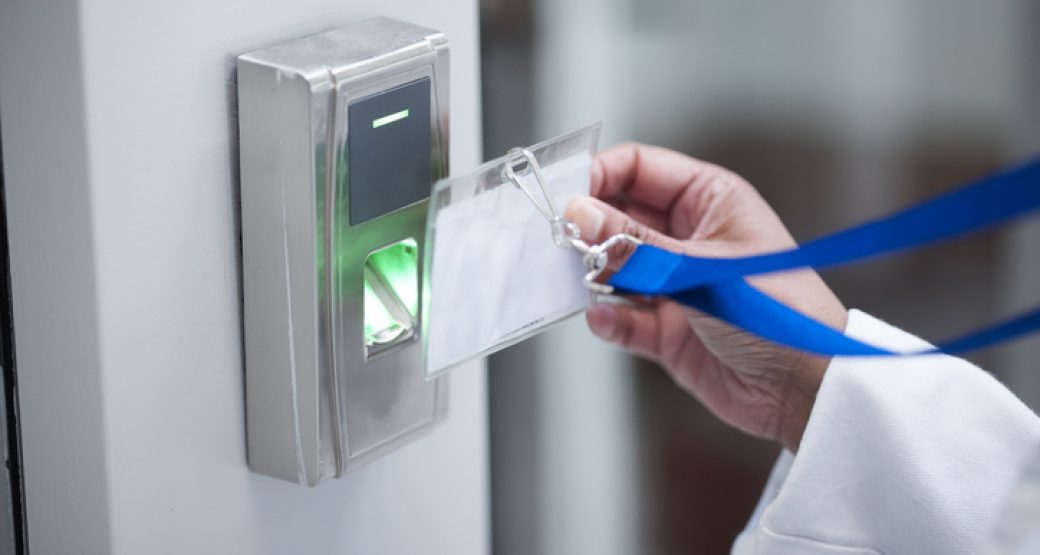
Florida healthcare facilities face a unique operational challenge: maintaining security across dozens of zones while ensuring clinical staff can move efficiently, families can access patient areas appropriately, and emergency protocols function flawlessly. Traditional lock-and-key systems create constant friction in these environments, forcing facility managers to choose between security and operational efficiency.
Modern healthcare access control eliminates this false choice. Rather than treating access control as simply a security measure, forward-thinking healthcare administrators recognize these systems as operational tools that improve workflow, reduce administrative burden, and enhance patient safety simultaneously.
Proven Healthcare Security: ProTech Security has decades of experience designing integrated security solutions for healthcare facilities. Start a conversation today.
Challenge #1: Managing Complex Multi-Zone Access Requirements
Healthcare facilities aren’t single spaces — they’re collections of distinct zones with vastly different access requirements. Public lobbies welcome anyone during visiting hours. Patient floors require staff credentials but allow escorted family members. Pharmacies, laboratories, operating rooms, and medical records areas demand strict access limitations. Administrative offices, IT rooms, and maintenance spaces need their own protocols.
Managing these varying requirements with physical keys becomes impossible at scale. When an employee leaves or loses a key, you’re not just rekeying one door; you’re potentially rekeying an entire wing. When temporary contractors need access to specific areas for projects, you’re distributing keys that may never be returned.
Access control systems solve this through zone-based permissions managed centrally through software. A nurse receives access to patient floors, nursing stations, and medication rooms, but not to the pharmacy, laboratory, or administrative offices. Visiting physicians get temporary credentials for their rotation period. Maintenance staff access mechanical rooms and storage areas during their shifts only.
When circumstances change, administrators update permissions instantly through software rather than collecting keys and scheduling locksmith visits. This flexibility proves invaluable in fast-paced healthcare environments where roles shift constantly.
Challenge #2: Effective Visitor Management Without Compromising Patient Care
Florida healthcare facilities serve diverse patient populations, from residents to medical tourists traveling from across the country and internationally. Family members need access to visit loved ones, but facilities must prevent visitors from wandering into clinical areas, accessing other patients’ rooms, or entering restricted zones.
Paper logbooks and basic visitor badges provide minimal control and create no audit trail. When incidents occur, facilities have no reliable record of who accessed which areas and when.
Integrated visitor management systems working with access control provide structured solutions. Visitors check in at reception, receive temporary credentials valid only for specific patient rooms or floors during designated hours, and the system automatically deactivates credentials when visiting hours end.
For family members who visit regularly during extended patient stays, facilities can issue time-limited visitor credentials that work only during approved hours. This eliminates the daily check-in process for regular visitors while maintaining complete access control and documentation.
Challenge #3: Emergency Protocol Integration With Life Safety Systems
Healthcare facilities must respond instantly to two opposing emergency scenarios: fires requiring immediate evacuation with doors automatically unlocking, and security threats requiring immediate lockdown with doors automatically securing.
Access control systems that don’t integrate with fire detection and life safety systems create dangerous complications during emergencies. Staff shouldn’t manually unlock doors during fire evacuations or manually secure doors during active threats; these responses must happen automatically.
Modern integrated security systems coordinate access control with fire detection, intrusion systems, and video surveillance to provide appropriate automatic responses. When fire alarms activate, the system immediately releases magnetic locks on egress doors while maintaining security on perimeter doors and sensitive areas. During security lockdowns, the system secures specified zones while ensuring emergency exits remain functional.
This integration extends to mass notification capabilities as well. When emergencies occur, mass notification systems coordinate with access control to ensure staff and visitors receive appropriate instructions for their current location within the facility.
Partner With Florida Healthcare Security Specialists
Healthcare access control requires expertise in both security technology and healthcare operations. At ProTech Security, we’ve spent over 40 years designing integrated security solutions for healthcare facilities throughout Central Florida.
Our team understands the unique operational challenges Florida healthcare facilities face, from managing high visitor volumes to addressing emergency preparedness protocols. We work with leading technology partners to design access control systems that enhance security while improving daily operations for clinical staff and administrators.
Don’t let outdated access control create operational friction in your healthcare facility. Contact our team today to discover how modern access control solutions can transform both security and efficiency.


