
At ProTech Security, we talk about fire detection for a living. We design systems, install equipment, and make the case to business owners across Northeast Ohio and Central Florida that comprehensive fire protection is essential. This is what we do: we’ve cited the statistics and walked through the scenarios.
And then, on the morning of January 4, 2026, it happened to us.
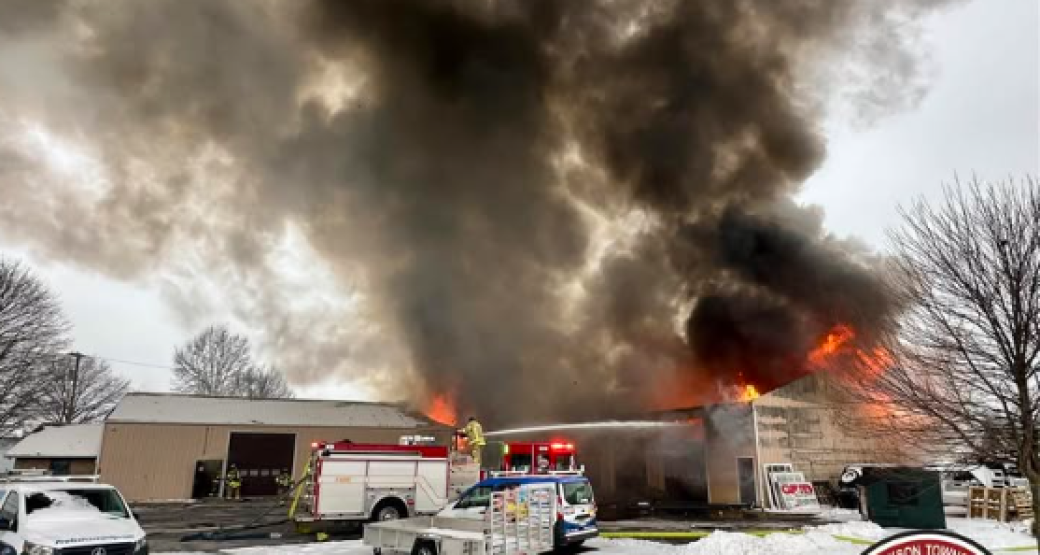
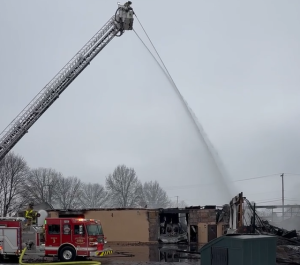
At approximately 8:30 am on a Sunday, fire crews responded to reports of smoke coming from a commercial building in Jackson Township, Stark County — a building that housed ProTech Security operations. Upon arrival, firefighters found smoke and fire showing from the roof. They initiated an aggressive interior attack before transitioning to defensive operations due to structural instability. The building was a total loss.
No firefighters were injured. No civilians were harmed. The businesses inside were unoccupied at the time.
We’re sharing this story not because it’s comfortable, but because it’s true. And because if there’s something every business owner can take from what we experienced, we have a responsibility to say it plainly.
Security that makes a difference: Contact ProTech Security today to discuss our array of commercial solutions that better protect what matters most.
The Moment That Changed Everything
Sunday mornings are quiet. Buildings are empty. No employees are walking the halls, no one glancing out a window, no one who would have noticed anything wrong.
That’s precisely when a monitored fire detection system earns its place.
Our system did what it was built to do: it detected the problem and immediately triggered an alert through our monitoring infrastructure. That notification set the emergency response chain in motion. That same chain brought Jackson Township Fire Department crews to our doorstep within minutes, along with mutual aid from Green Fire Department, Plain Township Fire & Rescue, North Canton Fire Department, and Jackson Township Public Works.
The fire had already reached the roof by the time responders arrived. That’s the nature of fire; it moves fast and doesn’t wait for business hours. But the critical difference between a fire that’s discovered and a fire that’s detected is time. And time, in these situations, is measured in lives and livelihoods.
We didn’t discover the fire by chance. We were notified.
Lesson #1: Monitored Fire Detection Is Not Optional
There’s an important distinction that gets overlooked in most conversations about fire safety: the difference between a fire alarm and a monitored fire alarm system.
A standard alarm makes noise. It alerts whoever happens to be nearby. In a building that’s occupied during a weekday, that might be sufficient. But commercial buildings are unoccupied 50–75% of the time, according to research. During those unoccupied periods, an unmonitored system can delay emergency response by 10 to 60 minutes or more — or provide no notification at all.
A professionally monitored system operates differently. The moment an alarm activates, an automatic signal transmits to a central monitoring station. Trained operators verify the alert and contact emergency services directly — typically within 30 seconds of activation. No one needs to be present. No one needs to notice smoke from a window or smell something on their way into work on Monday morning.
That speed matters enormously. According to the National Fire Protection Association, 95% of direct property damage occurs after a fire has progressed beyond its early stages. The gap between detection and dispatch is where that progression happens, and monitoring closes that gap.
Our professionally monitored fire alarm systems are designed around this exact principle: protection that doesn’t depend on someone being present to work. On January 4, 2026, that design decision mattered more than we ever hoped it would.
Lesson #2: A Disaster Recovery Plan Is Everything
Losing a building is devastating. But losing a building and losing a business are two very different outcomes; the difference between them is planning.
A disaster recovery plan is exactly what it sounds like: a documented, rehearsed strategy for what happens after the worst occurs. Not if. After.
A strong plan covers the essentials: how the team communicates immediately following an incident, where operations can be temporarily relocated, how critical data and systems are backed up and accessed, which team members are responsible for which decisions in the immediate aftermath, and how customers and partners are kept informed.
For ProTech, that planning meant we were operational again within weeks of the fire. Not months. Weeks. That outcome wasn’t accidental; it was the result of having thought through the “what now” long before we ever needed the answer.
For business owners who haven’t yet built a formal recovery plan, the question isn’t whether you’ll ever need it. The question is whether you’ll have it ready when you do.
Lesson #3: Why People Matter Most
Technology is the foundation of good security and fire protection. But technology doesn’t execute a plan. People do.
In the aftermath of January 4th, our team stepped up in every meaningful way. Leadership made rapid decisions under pressure. Staff adapted to disrupted operations without missing a beat. The people who’ve built their careers at ProTech showed up, not just for their own sake, but for the customers who depend on us.
We believe, as a matter of professional principle, that life safety always comes first. According to the NFPA, structure fires account for the vast majority of civilian fire fatalities in the U.S. every year. The fact that not a single person was harmed on January 4th reflects the combination of a system that worked and a team that was prepared.
No amount of equipment replaces the human judgment, calm, and training that gets people through a crisis. The two work together, and businesses that invest in only one of those elements are only partially protected.
What Businesses Get Wrong About Fire Protection
In our 40-plus years of working with commercial clients, we’ve heard the same assumptions again and again. They’re understandable. They’re also dangerous.
“It won’t happen to us.”
We thought we understood this risk better than most. We install fire detection systems for a living. And it still happened to us. No business, in any industry, in any location, is exempt.
“We’re up to code, so we’re covered.”
Fire code compliance sets a minimum legal standard. It does not constitute a comprehensive preparedness strategy. Codes tell you what’s required. They don’t tell you whether your team knows what to do, whether your data is backed up, or whether your business can survive a total loss.
“We’ll figure it out if something happens.”
Figuring it out in the middle of a crisis, with smoke in the air and responders on scene, is not a plan. Panic is not a substitute for preparation. The businesses that recover fastest are the ones that made their decisions long before they needed them.
Compliance and preparedness are not the same thing. One is a legal threshold. The other is a commitment.
Practical Takeaways for Business Owners
If our experience translates into action for even one business owner, it was worth sharing. Here’s where to start:
- Ensure your fire detection system is professionally monitored. If your alarm only makes noise, it’s only protecting you when someone’s listening. Professional monitoring provides coverage around the clock, regardless of occupancy.
- Review your current detection coverage. When was your system last inspected? Are all areas of your facility covered? Gaps in coverage are gaps in protection.
- Build or update your disaster recovery plan. Document communication protocols, backup locations, data continuity procedures, and team responsibilities before you need them.
- Test your systems and procedures regularly. A system that hasn’t been tested is a system you’re not sure works. Schedule inspections, run drills, and verify performance proactively.
- Train your team on emergency response. Your employees are the human layer of your security and safety ecosystem. Make sure they know what to do.
- Evaluate your insurance coverage. Take a hard look at whether your current coverage would actually get your business back on its feet after a total loss. ProTech’s fire safety checklist is a practical starting point for this review.
Gratitude for Our Community
We want to be direct about something: the response to what happened on January 4th moved us.
To the crews from Jackson Township Fire Department, Green Fire Department, Plain Township Fire & Rescue, North Canton Fire Department, and Jackson Township Public Works — thank you. You ran toward the problem without hesitation. The fact that everyone came home safe is a testament to your professionalism and courage.
To our customers: your patience and support during the weeks that followed meant more than we can adequately express. You trusted us to keep our commitments to you, and we were determined not to let that trust down.
To our team: you demonstrated exactly the kind of character that’s built over decades of doing this work the right way. We’re proud of every one of you.
And thank you to the broader community in Northeast Ohio. The outreach, the concern, the simple acknowledgment that something hard happened — it reminded us why we do this work where we do it.
Turning Experience Into Responsibility
ProTech Security has spent more than four decades telling businesses why fire detection and preparedness matter. We’ve built the systems, made the case, and seen the outcomes, good and bad, from installations across two states.
Now we’ve lived it.
We don’t say that to make a sales pitch. We say it because it changes something — in us, and in the conviction with which we approach this work. This is no longer just theory when we tell you that your fire detection system needs to be monitored. We are not citing statistics to fill a page when we tell you that early detection changes outcomes. We know.
The worst possible way to learn these lessons is the way we learned them. We’d rather you learn them here.
If you’re ready to take a serious look at your fire protection and emergency preparedness, contact the ProTech Security team for a consultation. We’ll come see your facility, assess what you have, and tell you honestly what we’d recommend — because that’s what we’d want if the tables were turned.


